Showing posts with label Exercise. Show all posts

02 September 2012

Filthy Fifty Anniversary WOD

It's that time of the year, the Filthy Fifty.

Last year I thought I was doing well, but it was slow. 35:34 (done Aug 21, 2011). Compared to my 2010 time of 32:49 (Nov 14, 2010).

This year, with my piriformis syndrome (inflammation pressing against the sciatic nerve running under my right buttocks) and subsequent affect on my training...I was "just going to do it".

Decided to keep track of my time after each movement.
50 Box jumps (20" pretty much unbroken) 2:08,
50 Jumping pull-ups (45 lb & 25 lb plate on 20" box 20-10-10-5-5) 3:34,
50 Kettlebell swings (unbroken @ 12 kb) 5:35,
50 Walking Lunges 7:27,
50 Knees to elbows (6 in a row, then sets 2-3 at a time, all legitimate) 14:50,
50 Push press (did 30-10-10 @ 35 lb) 17:14,
50 Back extensions (had to do sets of 5, numbing back of my right leg/butt) 20:25,
50 Wall ball shots (14lb to 9' mark - higher than before - broken sets of 5-10) 24:50,
50 Burpees (broken sets of 5-10) 30:04,
50 Double unders (best string was 15) 31:51.

Some parts faster than last year, others slower. Overall a PR when I wasn't expecting it.

Yay!!

23 December 2010

12 Lifts of Christmas


First time was Dec 23, 2009
38 mins 30 secs |


1 Clean and Jerk (65#)
2 Muscle-ups (scaled)
3 Wall Balls (14#)
4 Medicine Ball Cleans (14#)
5 Push Presses (65#)
6 Pull-ups (red band)
7 Box Jump - 18 in.s
8 Kettlebell Swings (12 kg)
9 Sumo Deadlift High-pulls (65#)
10 Jumping Lunges
11 Burpee Broad Jumps
12 Handstand Push-ups (2 1/2 abmats)

Count down just like in the song.

This year: ‎
12 HSPU (2 abmats), 11 burpee broad jumps, 10 jumping lunges, 9 sumo deadlift high pulls (65#), 8 kettlebells (16 kg), 7 box jumps (22"), 6 pull-ups, 5 push press (65#), 4 medicine ball cleans (14#), 3 wall balls (14# to above 8' mark), 2 jumping muscle-ups, 1 clean & jerk (65#). Only part NOT Rx was the muscle ups. Aw...esome "sweat devil" at the end.


32:47

30 November 2010

26 September 2010

This Fight Went Very Bad.....


I started out strong, on target in the first round. But the wall was HOT, and the medicine ball was HOT (burning fingers even), and despite good fluid intake all morning I think I was dehydrated.


In the second round I was dizzy and knew something was wrong. My first DNF. So embarressed. So dissapointed with myself.


I cooled down under the tent with water & ice. Then went back about 45 min later but this time at half-pace.


Kept to my plan for taking it easy (maybe too easy?) and only scored 188 . But I finished!


I did this in support of our military, active & reserve, retired & veterans, healthy & wounded, and in honor of those no longer with us. Too many are affected by this war on terror. I hope we can finish the job and get the rest of our troops HOME!

Thank you again to all who supported me, inspired me, and pushed me. I LOVE YOU.

22 August 2010

The Filthy Fifty Redux


Last year in Balad I did my first "Filthy Fifty" (but it wasn't totally correct since we didn't have a GHD for the Back Extensions, I couldn't do double-under jump rope, and my weight lifting weren't at the Rx level yet). My time was 35:00.

Today I wanted to give it another try, but this time try to do it as prescribed (Rx) for women: Box Jump 20", Jumping Pull-ups, Kettlebell Swings 12kg, Walking Lunges, Knees-to-Elbows (this is the only exercise I could not do Rx, half were done on the floor), Push Press 35#, Back Extensions (GHD), Wall Balls 14#, Burpees (made me very dizzy), and Double-unders (...my best event in this WOD).

39:24 (felt longer). But all the weights were heavier than last year, and I did the double unders. My "knees-to-elbows" in Balad were definately not being done even close to correctly. In the end, I didn't puke (but the guy doing this with me did and couldn't finish). I'm exhausted & my throat is sore. But I'm tickled that I did it, and looking forward to a PR next time. That won't be until next year.

Next up? Taking a look at some of the more well known benchmarks (the "Girls"), maybe Angie or Barbara.

Noted today: Ryan came up to met afterwards and asked to touch my muscles. He said "you're looking like an action figure" and told me he wanted to come to the 6a WOD more often because I was his motivation to get off the pull-up band.
Awwwww. Blush. And "Wow" at the same time. I've never really seen myself as a role model for fitness before.

19 August 2010

My CrossFit Athlete's Profile


Aug 18th was the 1 year anniversary of my first WOD at CrossFit Las Vegas. I finally submitted my athlete's profile.

First and Last Name
Holly "kona" Brewer
Where ya from originally?
Santa Monica, CA (then San Diego & Salt Lake City)
How long have you been with CrossFit Las Vegas?
My first Elements was Aug 18th (just saw that on my calendar and decided it meant it was time for me to fill out this profile).
What's your favorite WOD?
Fight Gone Bad (cause I've been able to see the improvements and I love doing different exercises). Any chipper WOD. And box jumps (it's a love/hate relationship right now).
What's your least favorite WOD?
Right now Kettlebells are making me cry. And I won't go back to the rings (cause of my shoulder).

What were you doing before CrossFit? How did you hear about CrossFit and/or CrossFit Las Vegas?
TV nerd and bookworm in school. Started swimming in high school and while not athletic (ie. I was the often the slowest), I was stubborn (still am) and had a decent stroke so I got to stay on the team. I was good at pacing in the distance events. Swam in college & even played a little water polo. After that jogged a bit, then got certified to teach aerobics for about 10 years.

Found CrossFit while in Balad, Iraq - wanted to lose weight and P90X looked silly (can't exercise to a video when the guy looks like the host of Survivor; and I hate repetition, seeing people doing exercises improperly in the class watching the video, and it seemed so boring). I think my first class was Filthy Fifty (I only did 30 of each and even that was too much - I was limping ALL week, my calves were killing me, probably from jumping pullups and box jumps). Did the class 3-4 x week for two months and at the end redid the 50 (this time the whole thing. I have my time and equipment used written down some where. Just remember that my time was comparable to the 30 as far as pacing but I was stronger (i.e. higher box, used band for the pull-up, heavier weight, etc). Lost about 5# on the scale but probably gained muscle. I looked and felt great! Wore a two piece bathing suit for the first time in years.

When I got home I tried to keep going using the main website for workouts. But the place I went was missing some key equipment and it wasn't the same (though I got compliments on my lifting when doing Bear Complex). Internet search "cross fit las vegas" and you know what comes up first. Only 4 miles away, Kismet! First evaluation and then Elements started. I was in heaven!

Give us some insight as to your thoughts after your first workout at CrossFit Las Vegas.
Loved it, of course. Shorter than the WODs we were doing in Balad, but here I was getting good instruction for proper lifting (I knew I had some bad habits or lack of knowledge cause in Balad there wasn't any training for beginners).

Tell us a little about then vs. now with regard to your performances on a couple of the benchmark WODs, ie Fran or Cindy.
I keep surprising myself. Beginning of the year I set a couple of goals (10 pull-ups, 20 burpees without getting dizzy) and now I have to find new ones. Funny thing is some times I'm jumping up and down all excited when I do a PR, other times I'm just quiet and smiling to myself. Then there are the times I freak out at what I've been able to accomplish (climbed halfway up the rope last week and got a little scared when I looked down).

I'd love to see more opportunities to compare or measure progress, like offering one benchmark per week. My favorites are still chippers. "12 Lifts of Christmas" was so much fun. I think next Sunday open gym I want to do Filthy Fifty just to see how I compare to the end of last summer.

Do you have any special or favorite CrossFit Las Vegas memories/moments?
1. First time I did 5 pull-ups in a row; and then again when I did 10 (it was sort of a surprise to me - I'd been working on them after the WODs and when I did it, believe it or not I didn't jump up and down, I just quietly walked up to Zach and smiled).
2. Passing Tier 2.
3. Meeting so many new & awesome people.
4. The most recent FGB when I improved my score by 30.
5. Doing 30 double-unders in a row (again, surprised myself).
6. Shooting in the desert.

What advice would you give to a newbie or someone just joining CrossFit Las Vegas?
You don't have to "be in shape" or "young" to do this. We don't bite, kick, or snicker about what you are wearing. OMG this place is so *non*judgemental compared to globo gyms. Trust me, I used to teach aerobic, step & cross training classes. This is the only place where other people are working out WITH you, not you working out with other people around you. So cool how supportive everyone is and love how we socialize before & after classes.
You don't get that at most globo gyms.

This is about improving yourself. This is about your own self-esteem. This about listening to your own body and watching some amazing things change. The only competition with within yourself. Embrace the challenge and love the results.

And finally (and most importantly) Who is the best and most incredible coach at CrossFit Las Vegas? Explain/defend your answer.
Zach is precise, but my hip is still mad at those GHD back extensions/wall balls you set for me that Sunday.
Vili knows me so well now (all those early mornings together).
Mike is precise in his cues to get me back in proper alignment.
Lauren is so supportive and really does have the best warm-ups/stretches. Nice to see we're getting more of the stretching after class.
And then there is Joe, damn I enjoy the sarcasm, really, I do!

But what I love the most is that little push. Yeah, I know I'm tired and when the muscles fail I don't want to do the lift improperly, so I have to stop for a sec, but then you guys yell "get moving kona" or tell me "you have 30 sec" and I find the strength to pick it back up again. Thank you all!

Please pick out a cool picture :)

05 July 2010

Burpees at 38,000 ft


CrossFit702 is doing the "100 days of Burpees" challenge. No rest during vacation. But I decided to try something unique.


Thank you to the flight attendants on American Airlines flight 1372 for allowing me to block the aisle for a minute, and taping it for me.

03 July 2010

CrossFit on Vacation: Arlington Heights, IL


It's nice to find CrossFit Affiliates when traveling. I'm north of Chicago this weekend and found Elite Athletic Development (EAD) in Arlington Heights, IL.

Friday noon was working on strength/form on back squats (3 reps @ 125# for the third set). Then 10 minutes of sit-ups, jumping pull-ups and double-unders (completed 8 + 2/3rds rounds).

Saturday morning was 3 rounds of 30 wall balls (16#) and 30 hang squat snatch (35#). Exhausted (20:31).


Nice group of folks.

They have a strict on-time policy; the whole group does 5 burpees for every minute someone is late. Everyone goes through the posted dynamic warm-up before the trainer starts working with us. There was no PVC pipe range of motion work these two days. It's been interesting seeing how other places CrossFit. But it's tough when the trainer doesn't know your strengths/weaknesses. I miss my trainers and workout buddies back home.

02 July 2010

Fight Gone Bad


1 minute for each exercise: Wall-ball, 14 pound ball 8 ft target (Reps), Sumo deadlift high-pull 55 pounds (Reps), Box Jump, 18″ box (Reps), Push-press 55 pounds (Reps), Row (Calories). Three rounds with 1 minute rest in between rounds.


First time was in January, score 219.


Second time was in April, thought I'd do better but only 221.


Reviewed my scores and saw how I blew myself out in the first round and had nothing left. So I set some goals for each exercise looking for a 225 or better.

Third time in June, score 252!

End result is still the same - exhaustion.

24 June 2010

Fun Right Brain - Left Brain Exercise


Hubby forwarded this to me this morning.

"These are the things we're supposed to do to challenge our brain and try to slow up Alzheimer's Disease.....
It takes an average of 5 tries to get to 100%. Follow the directions!
It's harder than it seems, a real brain wake up"


The Color Test

How did you do?

20 June 2010

Passed Tier 2 Testing at CrossFit Las Vegas!


Testing for Tier 2 looks at your mastery of the 9 Essential movements, Olympic weightlifting, and ability to maintain output. Barbell lifts (deadlift, sumo-deadlift highpull, shoulder press, push press, push jerk, front squat, back squat, overhead squat, hang power clean, hang power snatch) done with 55#, pull-ups without any band, cannot come off the bar for each set of 5. Push-ups done strict, no knees, 10 reps nonstop. Double-unders could be mixed with singles, but no stopping at all. Good posture for the handstands (as you can see in the photo - that was easy). Knees-to-elbows were my only worry; I think the trainer might have been a tiny bit generous in passing me (but it was the last element and the first two were perfect).

With an average score 4.27 (out of 5) I have officially graduated into Tier 2 status! This was not an easy journey. 13 months of CrossFit and lots of watching, listening, practicing.... Phew! On to the next step. Vegas Fit Wars 2011.

19 May 2010

CrossFit in San Diego CA


With the growing popularity of CrossFit, it's becoming easier to find a box in most major cities. When traveling I look up affiliates and with this trip to San Diego was fortunate to find that CrossFit Invictus was only 4 short blocks away from my hotel.


They were very welcoming (if you're already an affiliate member, you can drop in for any group coaching class). Monday evening we worked on Push Jerk (I'm not a natural at the split but managed 5 reps at 105# x 2 sets - just need to work on widening my feet on the landing) then pushed my thrusters up to 65# for 20 reps in the WOD (previously been doing 55#). Monday was also Sage Burgener's birthday. She dressed appropriately.

On Tuesday morning was a fun set up Deadlifts, Box Jumps and Sprints...worked on continuously improving my time for each set. And pushed a couple of people who were lifting/jumping near me so they got better times (which makes me work harder).


That lesson/habit is one of the things I love about my affiliate, CrossFit Las Vegas - we are encouraged to push each other. You're not done with the WOD until the last person in the class is done. I love the support I get from the better athletes, and I enjoy working side-by-side with newer folks as they finish their sets.

This past week marked the one year anniversary of my first CrossFit WOD (in Balad, Iraq). When I started it was just a means to help lose weight. But it quickly became a lot more. I firmly believe I'm now more fit and healthy than 20 years ago when I was teaching aerobics, jogging, and even when doing short distance triathlons when I lived in San Diego. And I look forward to staying "young" with a healthy lifestyle for as long as my genetics allow it.

Wednesday is a rest day. Looking forward to future WODs and learning new things about what my body can do.

21 April 2010

Still Doing CrossFit


Next month it will be one year since I attended my first CrossFit workout.

What is CrossFit?
CrossFit is the principal strength and conditioning program for many police academies and tactical operations teams, military special operations units, champion martial artists, and hundreds of other elite and professional athletes worldwide.

Our program delivers a fitness that is, by design, broad, general, and inclusive. Our specialty is not specializing. Combat, survival, many sports, and life reward this kind of fitness and, on average, punish the specialist.

The CrossFit program is designed for universal scalability making it the perfect application for any committed individual regardless of experience. We’ve used our same routines for elderly individuals with heart disease and cage fighters one month out from televised bouts. We scale load and intensity; we don’t change programs.


While in Balad it started as a way to augment my weight loss. Then it became a personal challenge to do a pull-up (which I did on 28 June). After coming home I tried to do it myself at the regular gym (following the daily workout on CrossFit.com) but sometimes there wasn't the right equipment, or no way to time it properly.

A month later I found CrossFitLasVegas with trainers that helped me learn proper lifting technique and scaled workouts for success, safety and effectiveness. I also found a supportive community.

All of our workouts can be tracked on BeyondTheWhiteboard so progress can be measured. Every week I find myself doing something a little faster, a little stronger, or even just a little easier. The first time I did "Murph" it took 1 hour 23 minutes (using a treadmill for the running and a blue band for the pull-ups). A couple of weeks ago we did this WOD at CFLV. New time to beat: 51:59 (pull-ups with the red band, running outside. Pushups were not regulation but they will be the next time).


While in Balad my max effort on Deadlift was 155#. In January this year I lifted 180# and last week I did 2 sets of 5 lifts at 135# with 1 set at 145#.

Oh, and the original goal of weight loss? Definately seeing the difference. I hadn't felt comfortable in a bikini in YEARS.


29 November 2009

Working Off TG Weekend


"Linda"
10-9-8-7-6-5-4-3-2-1 reps (scaled)
Deadlift (115#)
Bench Press (75#)
Clean (60#)
22:45

What a gorgeous sunny day. Went for a short walk also.

24 November 2009

Deep Thoughts (Politically Incorrect)


A group of mothers watching daughters practice cheer routines in the Tactical Fitness Gym. Sitting on the benches, munching on bags of chips or chocolate covered granola bars. Instead of taking this time as an opportunity TO MOVE THEIR MORBIDLY OBESE BODIES and walk around the gym for an hour.

UGH!

My time in the gym:
Warm-up 1000m row, 15 pullups (blue band, no stopping), 45# deadlift x 10, mid-hang clean x 10, front squat x 10, push-press x 10, back squat x 10. 20# medicine ball cleans x 10. Set up the equipment for the WOD.
2 laps (~300m)
30 back squats 65#
10 kettlebells 25#
3 laps (~500m)
20 back squats 55#
20 kettlebells 25#
4 laps (~675m)
10 back squats 55#
30 kettlebells 25#
22:00 min

I'm now officially tired, if not exhausted. Still favoring my right elbow, the Lateral epicondylitis is still bothering me but not keeping me from exercise (like it did at the end of September). I believe the fish oil (Omega 3) has been helping to reduce the inflammation.

10 November 2009

New USAF Fitness - Mock Test Results


The 779th MDG/MDSS is running mock Fit Test this month - allowing us to compare our current fitness levels to the new criteria (which goes into effect the first of the year).

Here are my results from this morning. Looks like my sporatic CrossFit workouts are still paying dividends. It will be interesting to see how others do with these new standards. The bar got pushed pretty high for pushups. In the past people could still pass by doing well enough in other areas to make up for poor performance in just one (like women who cannot do many pushups). But now there is a set minimum and I fear many women will fail the pushups (and a lot of heavier men may have a hard time with the abdominal circumfrance and/or the run).


Here's an article from Air Force Times about the new fit test, and the whys behind it (hint: It's NOT testing our potential ability in combat, it's all about health risks).

PT designer explains Air Force’s new test

By Michael Hoffman - Staff writer
Posted : Wednesday Oct 28, 2009 14:16:18 EDT


Teed off about the PT test? Scratching your head over why there’s still a waist measurement? Or how come your run time counts six times more than your pushup score?

You’re not alone.

Complaints and questions are still pouring into the Air Force, even though the service unveiled the new standards five months ago.

The man with the answers is Neal Baumgartner, a retired Air Force major and exercise physiologist now working as a civilian with the 342nd Training Squadron at Lackland Air Force Base, Texas.

Baumgartner helped design the Air Force’s “Fit to Fight” fitness program in 2003 and he’s the one who two top leaders —Maj. Gen. Darrell Jones, director of force management policy, and former Chief Master Sgt. of the Air Force Rodney McKinley — turned to when they wanted to revamp the service’s PT test.

Scheduled to go into effect Jan. 1, the test is what service leaders tout as the only one in the military based on scientific research — done by Baumgartner. The Army, Navy and Marine Corps based their tests on normative standards, or the averages from past results.

Baumgartner answered some of the questions airmen still have for Air Force Times, but first he wanted to clear up the misconception that the service’s PT test measures an airman’s ability to perform his job. It doesn’t.

“[The Air Force’s fitness test] measures your health,” he said. “We are providing a standard that will test the forces fitness and health levels that should reduce health care costs and increase duty time.”

The new PT test even correlates an airmen’s run time and body composition with a low, moderate or high health risk.

Waist not
Questions always come up about the waist measurement. Airmen want to know why it doesn’t factor in height or age. Or why it’s even part of the test when the other services leave it out.

Baumgartner’s response: It’s the second best test to gauge an airmen’s health.

Other than the run, Baumgartner said, research shows an airman’s waist size predicts his overall health better than the PT test’s two other events — the pushups and sit-ups.

The larger the waist, the more intra-abdominal fat — what Baumgartner calls “dangerous fat” — a person has. It’s dangerous because it sits next to your organs. A recent study in the Netherlands found that waist size helps predict susceptibility to cancer.

Leaders chose not to scale a waist size against an airman’s height or age, Baumgartner said, because research didn’t show either factor should affect waist size.

“Your stature has no influence on the health outcome variable,” he said. “A person’s height doesn’t alter their abdominal circumference.”

And to the older officers and senior non-commissioned officers who think they should get a break on their waist, forget it, Baumgartner said. If anything, he said, the waist measurement should be smaller for older airmen.

Baumgartner explained the older you are, the less muscle and more intra-abdominal fat you have. Air Force leaders didn’t want to give airmen the impression they can get fatter as they got older — although the other PT test events are scaled for age.

The service did relax the waist measurements needed to score the maximum number of points, from 32.5 to 35 inches for men and 29 to 31.5 inches for women.

Research shows that larger waist sizes pose significant health risks, Baumgartner said. The service also didn’t want airmen pushing too hard to cut weight to reach those waist sizes, he said.

As with keeping the waist measurement, the Air Force wasn’t out to impose cruel and unusual punishment by changing the age ranges for PT scores from five to 10 years. The science just didn’t back up having 5-year groupings, Baumgartner said. After all, scientists never want to get ahead of their data and “our data separated airmen in 10-year groups,” he said.

Run with it
Plenty of conspiracy theorists wonder if the Air Force wants to train marathoners, not good airmen, with a PT test that gives 60 possible points on a 100-point test to the 1.5-mile run.

Baumgartner’s other job as a high school cross country coach certainly won’t help quell those theories, but he said the run is still the best test to judge an airmen’s health.

It best measures how a person’s body transports and uses oxygen while exercising. The better your body can do that, the more fit you are, Baumgartner said.

This is why the Air Force bumped up run scores from 50 possible points to 60.

It’s also the event where airmen need to focus hardest if they want to pass the new test. However, the run is also the most difficult event to improve on quickly.

Baumgartner recommended airmen start slow and not expect to drastically change their score in one week. It takes a disciplined approach to improve your 1.5-mile run time.

Depending on age, gender and skill level, airmen will have to devise their own running programs, but Baumgartner advised working with the fitness experts at base health and wellness centers.

Baumgartner also said PT leaders must design fitness sessions that keep airmen’s attention while providing a complete body workout. He recommended circuit training that focuses on multiple muscle groups instead of just repeating pushups, sit-ups and a short run.

“You can’t use the Johnny-off-the-shelf fix,” Baumgartner said. “It has to be part of your lifestyle.”

Here are some answers/comments/info about the USAF Fit Test, from the AFPC Fitness Program website. (My own comments are included).

Why did the Air Force revise the Air Force Fitness Program?

In the summer of 2008, then Chief Master Sergeant of the Air Force Rodney McKinley requested an Air Force audit, and it clearly revealed the fitness program needed significant improvement.

The audit revealed that unit programs did not create a "culture of fitness" needed in the Air Force. In addition, it identified inconsistencies in action taken on members who did not meet fitness standards and implementation of proper fitness testing.

Air Force Reserve Airmen (that's me) will fitness test 12 months after their last calendar year 2009 test date, then again 6 months later to progress to a biannual cycle. (My last test was in Sep 2009, so my first official test under the new system will be Sep 2010 and then Mar 2011 - both nice times of the year for Las Vegas weather).

Will there be any incentives for members who clearly demonstrate fitness excellence?

Yes. Patches are being designed for wear on the PT uniform. Patches will recognize both one-time and sustained (four consecutive tests over 2 years) performance in the Excellent category (composite score of > 90), and for scoring a perfect 100. (That perfect 100 will go to young men who are natural runners, I'm close, but that run time is not designed for a Clydesdale like me. My first 100 points this year will just have to be my only one, I'll still have the satisfaction that I earned it).

How were the minimum requirements for each component determined?

The minimum requirement for the aerobic and body composition (abdominal circumference) components was established at the cut line between moderate and high health risk associated with that component. Air Force officials want Airmen to avoid the high health risk region in order to pass the test. For pushups and sit-ups, the minimum requirements were established at the 50th and 60th percentiles, respectively, for performance among the entire U.S. population based on widely accepted fitness data. (I find that hard to believe regarding the pushups and women - my max score went from 18 to 38!)

Why did the service make the run scores harder to max out for certain age groups?

Air Force officials chose to use proven databases used by the Cooper Institute and recognized by the American College of Sports Medicine. New 1.5-mile run times that assess the most important physical fitness component, cardiorespiratory endurance or aerobic fitness, are based on the most current scientific data for age and gender. (For a max score on the run, I have to train to run a 1:53 quarter mile/7:32 mile - and maintain that speed the second 1/2 mile - I'm not saying it's impossible, but I've never enjoyed sprinting even when swimming, and at the peak of my running experience circa early 1990s I was usually in the 8 min range).

And now it's time to hit the gym.

18 October 2009

CrossFit at Andrews


There is a great set up in the gym at Andrews, called the Tactical Fitness Area. Organized classes on M & W at 6 & 7 am and 3 & 4 pm. But they post two different types of workouts for every day of the week (with and without weights). Or I can copy what is being done at CrossFit Las Vegas.

Saturday: I did a modification of "Workout with the Girls" that was posted for Friday at CFLV.
400m jog in the warmup
20 Pullups (red band), 20 pushups, 20 situps, 20 squats
400m run, 21 overhead squats (35#)
400m run, 21 kettlebell swings (25#), 20 pullups
400m run, 21 thrusters (35#)
400m run, 21 deadlifts (75#)
400m walk cooldown
Didn't time this, but it was about 30 min.

Sunday: 500m row warmup. Then 5 rounds for time of 12 deadlifts (70#), 9 burpees, 6 front squats (45#). Time: 11:32

It's hard to push when you are the only one doing it, but I'm glad I'm at least doing it. Hope I can actually attend a class & workout with others while I'm here.

18 August 2009

CrossFit in Las Vegas


Time to get back to serious workouts. Just can't get them on my own at the gym up the street. Not going to give up my membership ($35/m, open 24 hrs) cause in the dead of freezing winter or the blazing heat of the summer there is plenty of cardio equipment and some useful free weights. But I'm working out on my own (and intimidating some of the men, hehehehe).


I needed that support and structure of the CrossFit class I got in Balad. I needed the real pullup bars and the kettlebells and more than one barbell to do some of the WOD (workout of the day).

Googling CrossFit Las Vegas led me to, ta da!

It must be kismet (fate) because the gym is only 4 miles away (not too out of the way when I'm driving home from work).

Had my baseline evaluation today with Mike. After watching me jump rope, row, airsquat, do crossfit situps & pushups and demonstrate a pullup, he had me to the baseline workout: 500m row, 40 airsquats, 30 situps, 20 pushups, 10 pullups (used the purple band) in 6:45.

I stayed for the first of 12 Elements classes. Today we reviewed proper form in airsquats, deadlifts and pushups. Then we did the workout: 200m run, followed by 3 rounds of 15 airsquats, 12 deadlifts (I did 65#), 9 pushups, finish with another 200m run; my time 6:32. This workout will be repeated at the end of the course and I have to improve my time (should be easy since my legs were deadweights after the baseline workout so my run sucked).

Feels good to be back with the "muscle heads" (as my husband calls it). He should come visit - lots of women doing these workouts, not a typical bodybuilder type in the room. And we'd all kick his butt in any workout (shhhh, don't tell him I wrote that). I'd love for him to do this with me. But that is up to him, not me.

07 July 2009

Nutrition for the Athlete


Adapted from the Health & Lifestyle lecture I have been providing at Joint Base Balad, Iraq during my deployment with the 332d Expeditionary Medical Group.


The first priority for athletes is meeting energy requirements. Energy balance is key to maintaining lean tissue mass, immune and reproductive function, and optimum athletic performance.

To have calories in = calories out means you will have a balance effect on the scale. If you have more energy coming in then going out then your weight will start increasing. If you have less energy coming in and more energy going out then you will have a wt loss.

With limited energy intake the body will then use fat and lean body tissue for fuel. Not maintaining enough energy for fuel compromises the benefits of training.

You will most likely not achieve your best physical performance while restricting calories. (Keep in mind that it is certainly possible for an over-fat, way out of shape individual to both lose weight and improve their physical performance at the same time) However, for a normal weight, relatively “in-shape” individual…caloric restriction will be detrimental to performance.

Low-energy intakes can result in loss of muscle mass, menstrual dysfunction, loss or failure to gain bone density, and increased risk of fatigue, injury, and illness.

To help optimize training and prevent illness, athletes should consume a daily diet rich in nutrient-dense carbohydrates and high-quality protein in order to provide adequate energy for muscular activity and maintenance of optimal immune system functions.

Carbohydrates are the body’s main source of energy. The body converts Carbs you eat into glucose. Glycogen is the main storage form of glucose and it is stored primarily in muscle and liver.

Continuous exercise uses up the body’s glycogen stores. It is important to ensure adequate Carb intake pre, during, and post intense physical activity. Repetitive training/competition reduces glycogen storage leading to impaired performance.
Athletes (and very active military members) need adequate Carb intake to keep glycogen stores high, therefore allowing for optimal physical performance.

Approximate protein intake guidelines are based on the type of athlete. Requirements include the need to repair exercise-induced microdamage to muscle fibers, use of small amounts of protein as an energy source during exercise, and the need for additional protein to support gains in lean tissue mass. However, repeated research has shown that protein intake in excess of 2 g/kg simply results in the excess amino acids being converted to fat and stored appropriately.

Turns out that most Americans (even non-athletes) easily achieve these protein intakes as part of their regular diet, therefore it is rare that an athlete would need to deliberately add a protein supplement to their diet. Except when people are limiting their total caloric intake for weight loss.

For optimal benefit, spread protein evenly throughout the day.

Fat is important in the diets of athletes as it provides energy, fat-soluble vitamins, and essential fatty acids. Additionally, there is no scientific basis on which to recommend high-fat diets to athletes. There are no ergogenic effects from fat intake (i.e. eating more will not improve athletic performance, but not eating enought total calories may hurt your progress). Be sure to limit saturated fats since that is the type of fat that can raise blood cholesterol.


How much energy do you need? Even when you are trying to lose weight, there is a minimal amount of calories you need to prevent loss of muscle mass. You need to support your Resting Metabolic Rate (RMR).


Once you calculate what your body needs to support stable weight at your activity level, you can reduce the intake, increase the activity, or best - combination of both, to help promote weight loss. But never eat less than your RMR if you want to keep your metabolically active muscles - see "Maximizing Metabolism" Lecture (coming soon).
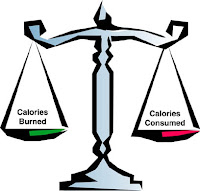
Want to gain weight (muscle)? You have to support the proper exercise (higher resistence, fewer repetitions to fatigue) with adequate rest for repair and building. And you need enough extra CALORIES (not extra protein). Remember the protein needs even when in anabolic mode (muscle building) are maximum 2 g/kg (or ~1 g/lb body weight).

Look at your hands; your two hands are a good representation of the total amount of protein you can use in a day for support of muscle building. Magazines advertising protein powders and bars and supplements are owned by the companies selling these products. High protein diets tend to increase blood acidity, phosphorus load (thus pulling calcium out of your bones and then it is lost in your urine), and nitrogen released when protein is used for energy (fortunately healthy kidneys can remove the excess nitrogen from our blood).

To get extra calories between meals try dried fruit & nuts, peanut butter sandwich, high fiber snack bars.


Hydration (Fluid) is very important. And being deployed in the desert (Iraq) makes it a prime concern even if you are not exercising. Water is the best rehydration for most people. Electrolyte-replacement Sport drinks (i.e. Gatorde or Powerade) are useful when your workout is over 60 min or you are drinking a lot of water and not eating (don't want to dilute the sodium in your blood).

Water helps cool your body. When you are active your body heats up. Sweating brings water to the surface of your skin where evaporation pulls this heat away from your body. If you don't have enough water to sweat, or you cover up all your skin so you sweat but it cannot evaporate, you will overheat. If your body temperature gets too hot, you are "cooking" yourself into a severe illness.

Some ways to tell if you are drinking enough. Weigh yourself before and after your workout. Drink at least 2 cups of water for every pound lost. Check your urine; if it's darker than pale yellow straw you need to be drinking more. Here in Iraq I've been drinking about 4L per day.


For more information:
sportsmedicine.about.com/Sports_Nutrition.htm
www.dietitian.com/sportnut.html
Food and Nutrition Information Center (USDA)
Nancy Clark, MS RD “Sports Nutrition Guidebook”

---------------------